
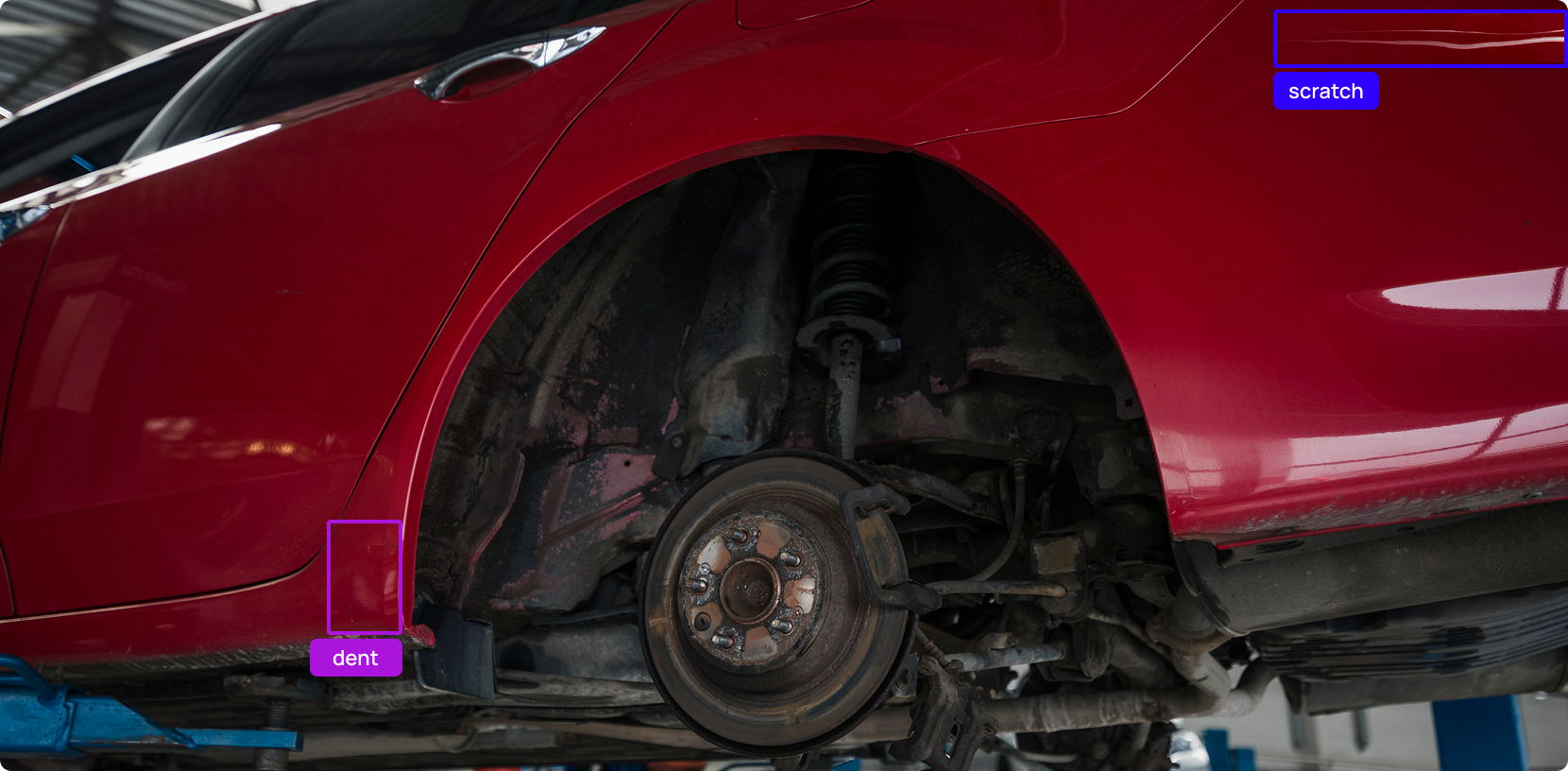
In the automotive industry, precision and quality define trust. Even the smallest surface imperfection, whether a scratch, dent, or coating inconsistency can lead to costly rework, warranty claims, and customer dissatisfaction. Traditional visual inspections, though long relied upon, struggle to keep pace with the increasing complexity, speed, and precision demands of modern automotive production lines.
Enter AI-powered visual inspection. With the help of deep learning and computer vision, manufacturers can now detect surface anomalies faster, more accurately, and at scale transforming quality control from a reactive step into a proactive advantage.
In this article, we’ll explore how AI for scratch, dent, and surface defect detection is reshaping automotive manufacturing, the challenges it solves, and how solutions like Akridata’s Vision Assist, Vision Command, and Vision Copilot empower OEMs and suppliers to achieve zero-defect goals.
The Hidden Cost of Surface Defects in Automotive Manufacturing
In automotive production, even a minor imperfection can ripple through the value chain. Consider the impact:
- Aesthetic sensitivity: Consumers equate flawless surfaces with brand quality and safety. Visible scratches or dents can trigger rejections even before mechanical assembly.
- Complex supply chains: Automotive parts move through multiple vendors and finishing stages. A missed defect early on can amplify costs downstream.
- Regulatory compliance: OEMs face strict standards on paint finish, body integrity, and component consistency.
- Operational cost: Rework and scrap due to undetected surface flaws add up quickly, affecting margins and production efficiency.
Surface defects, if left unchecked, can tarnish brand reputation and delay vehicle rollouts. Detecting them early and reliably isn’t just about quality, it’s about business resilience.
Why Traditional Inspection Falls Short
Automotive manufacturers traditionally rely on two main inspection methods:
- Manual inspection: Skilled technicians visually scan panels, bumpers, or painted surfaces under controlled lighting. While flexible, this process is slow, subjective, and inconsistent, especially under continuous production conditions.
- Rule-based machine vision: Cameras programmed with static thresholds or pre-set patterns detect deviations. However, these systems struggle with variable lighting or new defect types.
The result? Missed micro-defects, false alarms, and limited adaptability. As vehicle designs evolve and production speeds accelerate, these methods can no longer guarantee the precision automotive OEMs demand.
How AI-Powered Visual Inspection Changes the Game
AI-driven visual inspection systems redefine quality control by learning directly from defect data, both real and synthetic. Instead of hardcoding “what a defect looks like,” deep learning models recognize complex patterns across diverse materials, lighting conditions, and finishes.
Key Advantages:
- Unmatched accuracy: Improved detection rate of even microscopic scratches, dents, or coating inconsistencies.
- High-speed operation: Inspects every component in real-time, keeping pace with automated production lines.
- Continuous learning: Adapts to new defect types or surface variations without reprogramming.
- Traceability: Links every inspection outcome to part ID, batch, and timestamp for complete auditability.
By integrating AI into inspection workflows, automotive manufacturers gain consistent, objective, and actionable insights, reducing rework while ensuring every part meets OEM-grade quality.
Real-World Applications in Automotive Production
AI-powered inspection systems are already proving transformative across automotive production lines:
- Body Panels and Exterior Components
Detects scratches, dents, or waviness on painted surfaces or raw panels, ensuring showroom-quality finishes. - Bumpers, Doors, and Fenders
Identifies surface irregularities in molded plastic and metal parts, even under reflective or complex geometries. - Interior Trim and Dashboard Components
Spots texture inconsistencies, tool marks, or assembly scratches, critical for high-end interiors.
Strengthening the QA Chain with Akridata Vision Solutions
Akridata’s AI-powered visual inspection ecosystem helps automotive manufacturers move from reactive to predictive quality assurance. Here’s how each component plays a critical role:
Vision Assist
A next-generation AI visual inspection solution, Vision Assist enables manufacturers to automate surface defect detection utilizing deep learning models.
For automotive parts inspection, Vision Assist delivers:
- Real-time detection of scratches, dents, and coating defects.
- Superior accuracy across complex geometries and reflective surfaces.
- Integration with existing production cameras and inspection stations.
By implementing Vision Assist, manufacturers gain an intelligent inspection layer that operates continuously, improving quality without slowing production.
Vision Command
Quality assurance extends beyond detection, it requires control, traceability, and decision support. Vision Command centralizes your visual inspection data for complete visibility across lines and plants.
It provides:
- Unified dashboards for monitoring defect trends and production quality.
- Automated audit trails for OEM compliance and supplier certifications.
- Real-time alerts for emerging defect patterns.
For automotive manufacturers managing multiple production sites, Vision Command ensures every defect is documented, every inspection is traceable, and every decision is data-driven, all in one place.
Vision Copilot
AI models are only as good as the data they’re trained on. Vision Copilot lowers development cost & time to deployment by simplifying data curation and enhancing training datasets.
Key capabilities include:
- Easy visualization and automatic labeling of inspection data.
- Synthetic data generation for rare or new defect types.
- Collaborative model training and iteration cycles.
With Vision Copilot, QA teams can continuously improve defect detection models, keeping up with evolving materials, paints, and part designs without extensive manual retraining.
Driving Business Value Beyond Inspection
The value of AI inspection extends far beyond defect detection:
- Cost efficiency: Reduced scrap, rework, and line downtime.
- Operational agility: Real-time insights enable faster corrective action.
- Customer trust: Delivering consistently flawless components strengthens brand reputation.
- Compliance confidence: Automated traceability simplifies OEM audits and supplier verification.
In an industry where precision equals performance, AI-driven inspection is becoming the new standard for competitiveness and compliance.
Building the Future of Automotive Quality
AI is redefining how the automotive industry approaches quality control, turning inspection from a bottleneck into a competitive edge. With Akridata’s Vision Assist, Vision Command, and Vision Copilot, manufacturers can implement an integrated, closed-loop quality ecosystem that detects defects early, monitors performance continuously, and evolves intelligently.



No Responses